
 Save
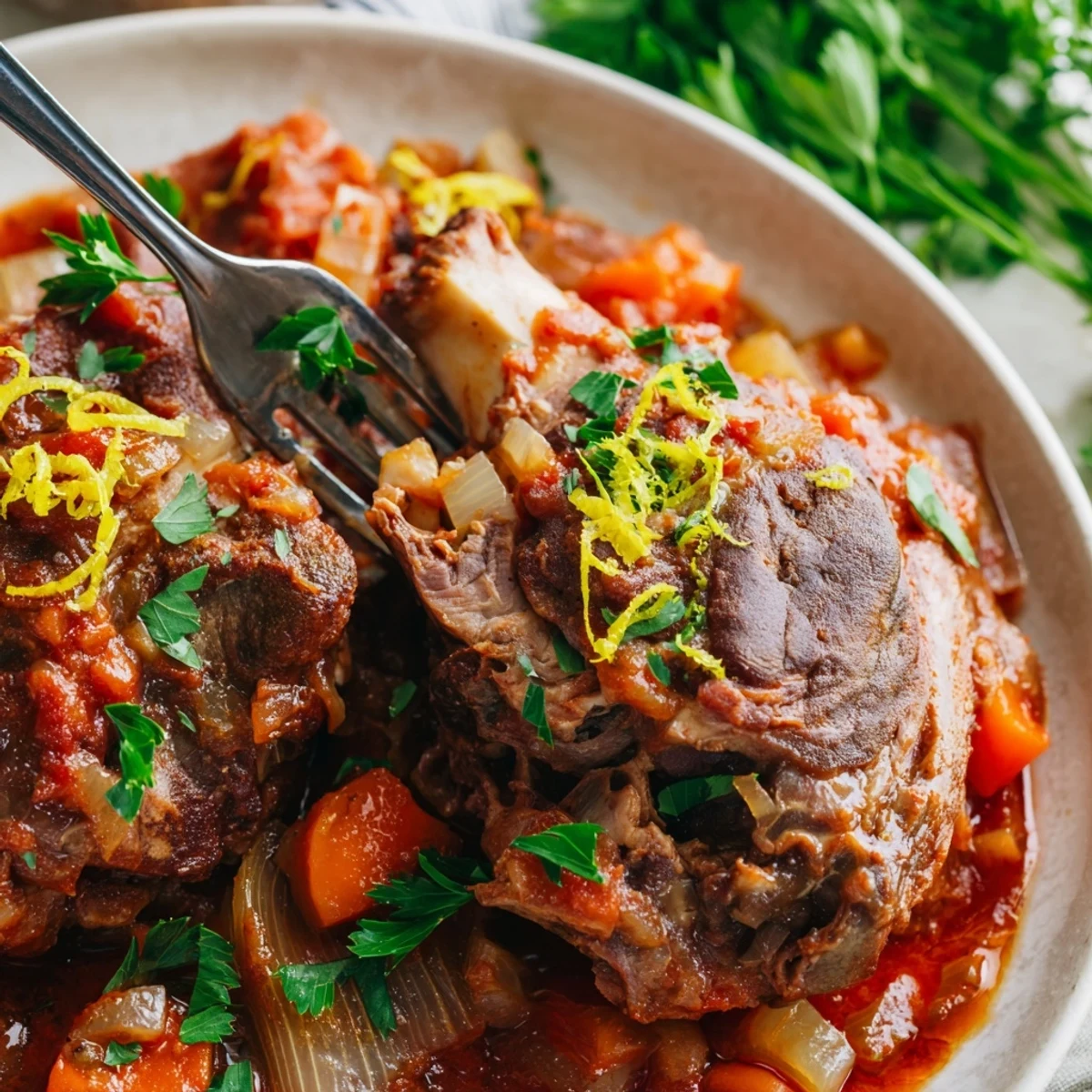
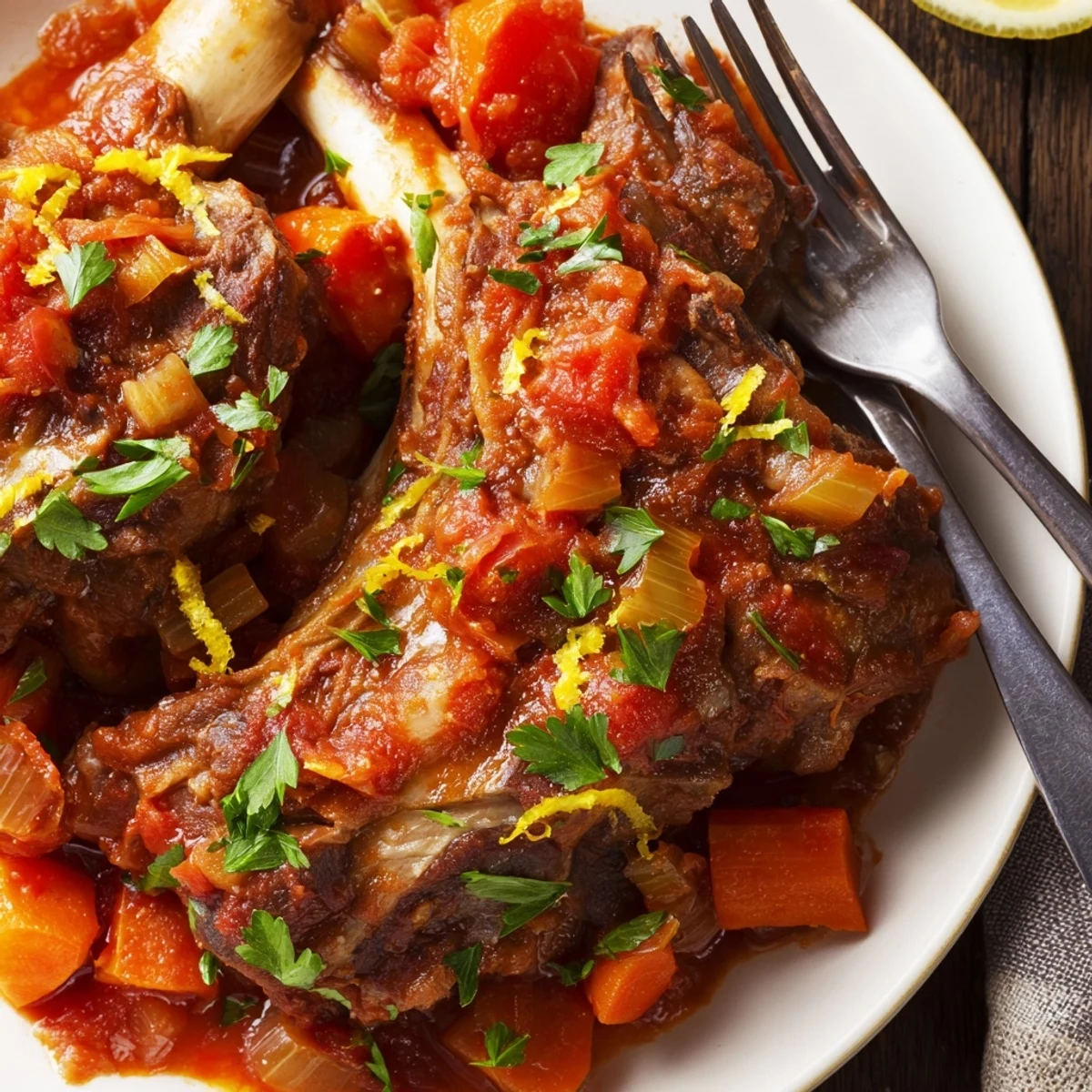
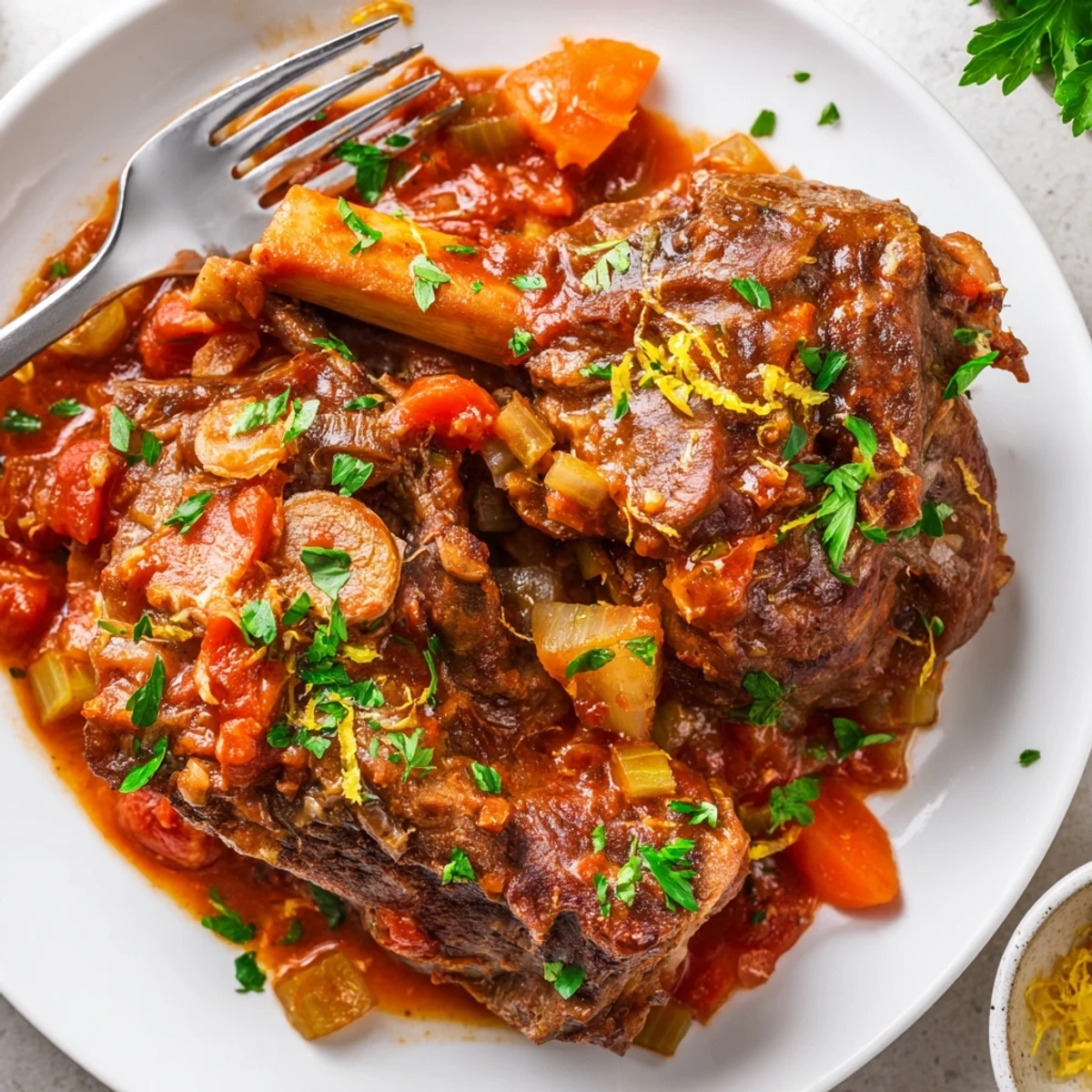
Save This classic Italian preparation transforms veal shanks through slow braising in a flavorful mixture of white wine, San Marzano tomatoes, and aromatic vegetables. The meat becomes incredibly tender, nearly falling off the bone after spending over two hours in the oven. A simple dredging in seasoned flour creates a beautiful golden crust, while the combination of thyme, bay leaves, and lemon zest infuses the sauce with bright, herbal notes. The traditional gremolata garnish of fresh parsley, garlic, and lemon zest adds a final burst of freshness that cuts through the rich braising liquid.
The first time I made osso buco, it was a snowy Sunday and I hadnt planned on spending three hours at the stove. But my local butcher had these beautiful veal shanks that practically demanded to be braised slowly, and suddenly my afternoon opened up in the most wonderful way. By the time dinner was ready, the house smelled like an Italian trattoria, and my roommate kept wandering into the kitchen asking if it was done yet.
I made this for my parents last winter when they came to visit, and my dad who usually critiques everything went completely silent after his first bite. That buttery-rich sauce clinging to the veal, the brightness of the lemon zest cutting through all that richness. My mom actually asked if we could skip the restaurant wed planned for the next night and just have leftovers instead.
Ingredients
- 6 veal shanks, 2 inches thick: These are the star of the show, and you want them cut thick enough to withstand hours of braising without falling apart completely
- 1/2 cup all-purpose flour: A light dusting creates this gorgeous golden crust and helps thicken the braising liquid into something silky and luxurious
- 2 tbsp olive oil and butter: Using both gives you the high-heat tolerance of oil with the rich flavor that only butter can provide
- 1 large onion, 2 carrots, 2 celery stalks: Your classic mirepoix foundation, diced small so they melt into the sauce as everything cooks down
- 4 garlic cloves, minced: Fresh garlic adds this aromatic warmth that permeates every bite of the finished dish
- 1 cup dry white wine: Something you would actually drink, as it reduces down and adds this bright acidity that balances all those rich flavors
- 1 28-oz can San Marzano tomatoes: Hand-crushing them yourself creates this perfect rustic texture and you can feel any tough pieces to remove them
- 2 cups chicken stock: Homemade if you have it, but a good quality store-bought works perfectly fine here
- 2 tsp fresh thyme leaves, 2 bay leaves: These herbs add that classic braised flavor profile without overpowering the delicate veal
- Lemon zest and parsley: Fresh herbs and citrus at the end wake everything up and add this gorgeous pop of color and brightness
Instructions
- Get your oven ready:
- Preheat to 325°F and move your rack to the lower middle position, giving yourself plenty of space for that heavy Dutch oven
- Prep the veal shanks:
- Pat them completely dry with paper towels, then mix the flour with salt and pepper in a shallow dish before lightly coating each shank and shaking off any excess
- Brown the meat beautifully:
- Heat the olive oil and butter in your Dutch oven over medium-high heat, then sear the veal on all sides for about 3-4 minutes per side until you have this gorgeous golden crust
- Build your flavor base:
- Sauté the onions, carrots, and celery for about 8 minutes until they soften and start to smell amazing, then add the garlic for just one minute so it does not burn
- Deglaze with wine:
- Pour in the white wine and use your wooden spoon to scrape up all those browned bits from the bottom, letting everything simmer for 2-3 minutes
- Create the braising liquid:
- Add those hand-crushed tomatoes with their juices, the chicken stock, thyme, bay leaves, and lemon zest, stirring everything together into this fragrant sauce
- Nestle in the veal:
- Return the browned shanks to the pot, tucking them into the sauce so they are mostly submerged, then bring everything to a gentle simmer
- Let the oven work its magic:
- Cover the pot tight and slide it into the oven for 2 to 2.5 hours, until the meat is fork-tender and practically melting off the bone
- Finish with finesse:
- Discard the bay leaves, skim any excess fat from the surface, and if you want to go traditional, sprinkle with gremolata of parsley, garlic, and lemon zest
 Save
Save This recipe has become my go-to for dinner parties because most of the work happens hands-free in the oven, leaving me free to actually hang out with my guests instead of being stuck at the stove. Something about the smell of slow-braised veal makes people feel instantly at home and taken care of.
Choosing The Right Veal
I have learned that not all veal shanks are created equal, and asking your butcher for shanks cut at least 2 inches thick makes all the difference in the world. Thinner cuts tend to dry out during those long hours of braising, while the thicker ones stay juicy and develop this incredible texture.
What To Serve Alongside
Risotto alla Milanese is the traditional pairing for good reason, that creamy saffron rice soaks up the braising liquid like nothing else. But I have also served this over creamy polenta or mashed potatoes when I want something more comforting and less fussy than risotto.
Making It Ahead
Osso buco actually tastes better the next day, so do not hesitate to make it a day ahead and reheat gently. The flavors have time to marry and develop in ways they just cannot during a single cooking session.
- Cool completely before refrigerating, and you can actually scrape off and discard the solidified fat easily the next day
- Reheat covered in a 325°F oven for about 30 minutes until hot throughout
- The gremolata should always be freshly made and sprinkled on right before serving
 Save
Save There is something profoundly satisfying about serving a dish that tastes like it came from a restaurant kitchen but was made with your own hands in your own kitchen. The way people fall silent when they take that first bite.
Recipe FAQs
- → What cut of meat works best for osso buco?
-
Veal shanks are traditional, cut about 2 inches thick with the bone intact. The marrow inside the bone adds richness and body to the sauce as it braises. Beef shanks make an excellent substitute with a slightly deeper flavor.
- → Can I make osso buco on the stovetop instead of the oven?
-
Yes, maintain a gentle simmer on the lowest heat setting and cook covered for 2-2.5 hours. Check occasionally to ensure the liquid isn't evaporating too quickly. The oven provides more even heat, but stovetop braising yields similar results.
- → What should I serve with osso buco?
-
Risotto alla Milanese is the most traditional accompaniment, its creamy texture perfectly complementing the tender meat. Polenta, mashed potatoes, or crusty bread also work beautifully to soak up the rich sauce.
- → How do I know when the osso buco is done?
-
The meat is ready when it's fork-tender and easily pulls away from the bone. This typically takes 2-2.5 hours of braising. The veal should offer no resistance when pierced with a fork, almost falling apart when touched.
- → Can osso buco be made ahead of time?
-
Absolutely. In fact, the flavors improve after resting in the refrigerator for 1-2 days. Reheat gently on the stovetop, adding a splash of water or stock if the sauce has thickened too much. The gremolata should be added fresh just before serving.
- → Is gremolata necessary for osso buco?
-
While not strictly necessary, gremolata provides a crucial bright contrast to the rich, slow-cooked meat. The combination of fresh parsley, raw garlic, and lemon zest cuts through the heavy sauce and adds complexity to each bite.