
 Save
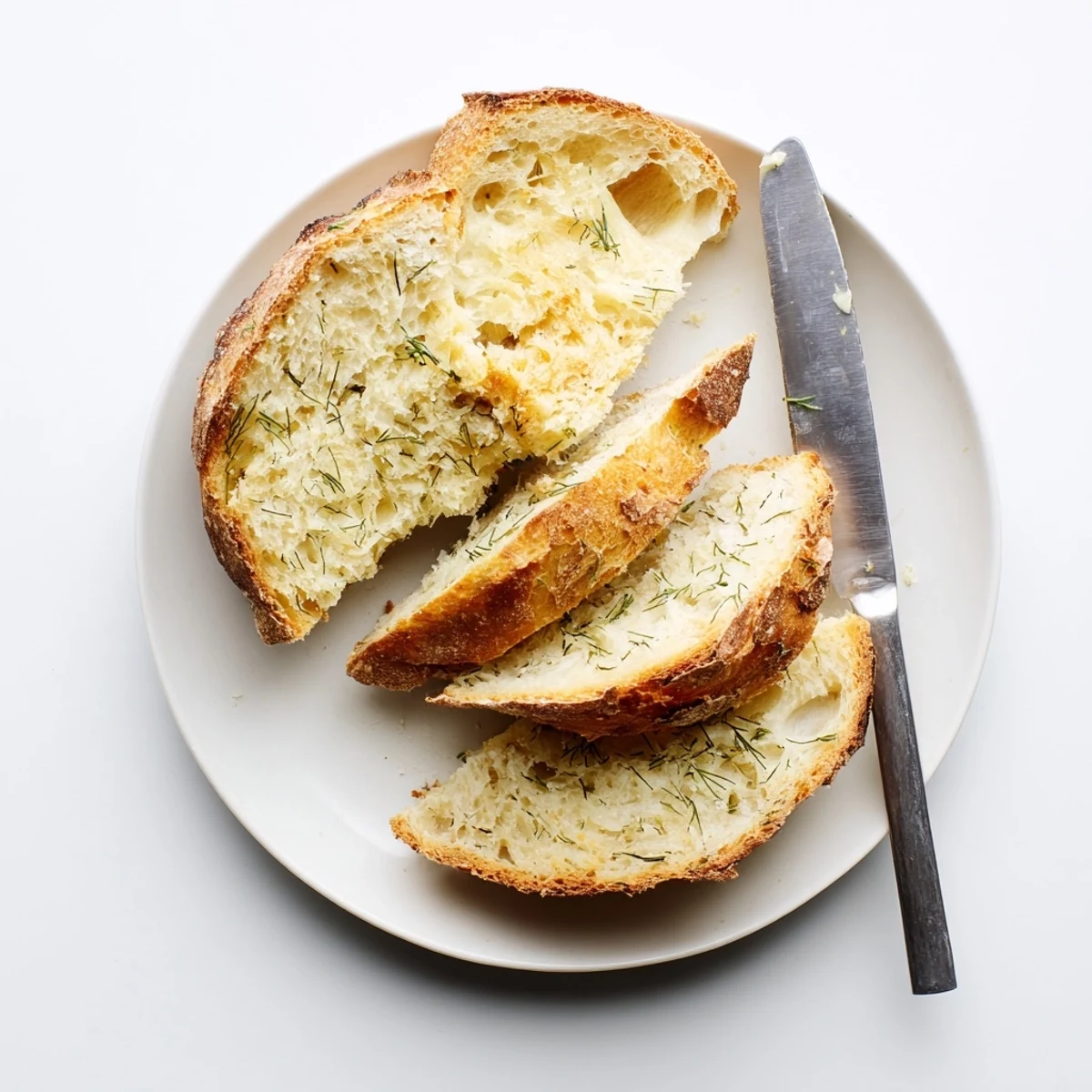
Save Craft a stunning European-style loaf without the intensive kneading process. This artisan bread combines savory fresh dill with rich, melted Gouda cheese throughout. The dough develops overnight, creating deep flavors and signature air pockets. Bake in a preheated Dutch oven for professional-style results—thick, crackling crust giving way to tender, cheese-studded crumb.
The hands-off approach makes this perfect for beginning bakers or busy schedules. Simply mix ingredients, let rise for 12-18 hours, then bake. The long fermentation creates complex flavor notes while the Gouda melts into gooey pockets throughout the crumb.
The smell of dill always reminds me of my grandmother apartment, where she kept a small herb garden in her windowsill. I discovered this bread during a rainy weekend when I wanted something comforting but didn't want to spend hours kneading dough. The first time I pulled it from the oven, the cheese had melted into these incredible pockets throughout the crumb, and I knew this was going to be a regular in my kitchen rotation.
I made this for a dinner party last winter, serving it alongside a simple tomato soup. My friends kept asking where I bought it, and when I explained I had thrown it together the night before, they practically demanded the recipe. Now it is my go to when I want to impress people without actually trying that hard.
Ingredients
- Bread flour: The higher protein content creates a better structure and helps the crumb stay light and airy
- Instant yeast: No need to proof it separately, just mix it right in with the flour
- Gouda cheese: Grate it yourself since pre shredded cheese has anti caking agents that prevent proper melting
- Fresh dill: The flavor really pops when it is fresh, though dried works in a pinch
- Lukewarm water: Should feel like bath temperature, around 100°F, to activate the yeast without killing it
Instructions
- Mix the dough:
- Combine the flour, salt, yeast, grated Gouda, chopped dill, and pepper in a large bowl, then pour in the water and stir until everything comes together into a sticky, shaggy mass
- Let it rest:
- Cover the bowl tightly with plastic wrap or a lid and walk away for 12 to 18 hours, letting time do all the work of developing gluten
- Shape the loaf:
- Scrape the bubbly dough onto a well floured surface and gently fold the edges toward the center to form a round, being careful not to deflate all those beautiful air pockets
- Second rise:
- Place the dough seam side down on parchment paper, cover loosely with a towel, and let it rest while your oven preheats
- Preheat with Dutch oven:
- Put your Dutch oven and its lid in the oven and heat to 450°F for at least 30 minutes, getting everything screaming hot
- Bake covered:
- Carefully lift the parchment and dough into the hot Dutch oven, score the top with a sharp knife, cover with the lid, and bake for 30 minutes
- Finish baking:
- Remove the lid and bake another 15 to 20 minutes until the crust is deeply golden and sounds hollow when tapped
- Cool completely:
- Let the bread rest on a wire rack for at least an hour before slicing, which is honestly the hardest part
 Save
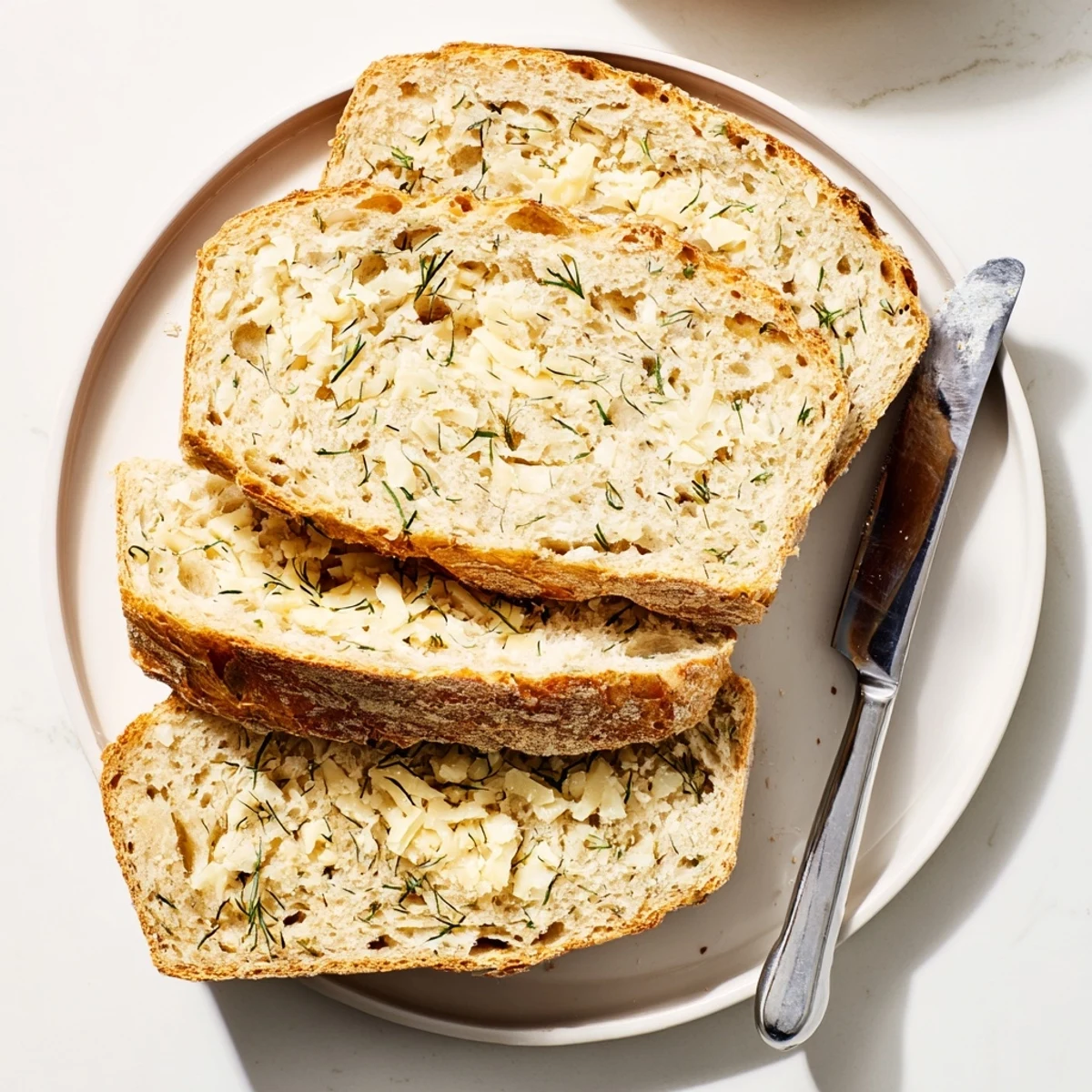
Save This bread has become a weekend ritual in my house. There is something magical about mixing ingredients before bed and waking up to dough that has transformed into something alive and bubbling. The first slice, still warm from the oven with cheese stretching as you pull it apart, is worth every minute of the wait.
Choosing Your Cheese
Gouda is my go to because it melts so evenly and has a nutty sweetness that plays perfectly with the herbal dill, but I have experimented with plenty of other cheeses. Sharp cheddar gives a stronger kick, while Emmental adds those beautiful stringy cheese pulls. Just avoid very soft cheeses like fresh mozzarella, which release too much water and make the dough soggy.
Dutch Oven Secrets
The Dutch oven method mimics professional steam injected ovens by trapping moisture from the dough itself, creating that blistered, crackly crust. If you do not have one, a heavy oven safe pot with a tight fitting lid works just as well. The key is getting it properly hot before the dough goes in, so do not rush the preheating step.
Serving Ideas
This bread shines alongside hearty soups and stews, but it is substantial enough to stand on its own as a snack. I love thick slices toasted and topped with a bit of butter or used as the base for an elevated grilled cheese. The dill flavor makes it particularly good with smoked fish or cream cheese spreads.
- Try adding lemon zest to brighten the dill flavor
- A tablespoon of honey in the dough helps the crust caramelize
- Leftovers make incredible croutons for salads
 Save
Save There is nothing quite like the satisfaction of pulling a steaming, golden loaf from your own oven, especially one that fills your home with the aroma of baking bread and melting cheese. This recipe has turned even my most bread intimidated friends into confident bakers, and I think it will do the same for you.
Recipe FAQs
- → Why use a Dutch oven for this loaf?
-
The Dutch oven creates steam during baking, essential for developing that thick, crackling artisan crust. The enclosed environment traps moisture from the dough, allowing the loaf to expand fully before the crust sets.
- → Can I use dried dill instead of fresh?
-
Yes, though the flavor will be more subtle. Use 1 tablespoon of dried dill in place of 3 tablespoons fresh. Consider adding it to the dough along with a teaspoon of lemon zest to brighten the flavor profile.
- → What cheese substitutes work well?
-
Aged cheddar offers sharper flavor while Emmental provides excellent melting properties. Fontina or Gruyère also deliver rich, nutty notes. Avoid fresh mozzarella as its high water content affects the dough consistency.
- → How do I know when the dough has risen enough?
-
Look for visible bubbles on the surface and dough that has at least doubled in volume. The mixture should look puffy and slightly wobbly when you gently shake the bowl.
- → Why is the cooling period important?
-
Allowing the loaf to cool for at least one hour lets the internal structure set. Cutting too soon releases steam, resulting in gummy texture and potential collapse of those beautiful air pockets.
- → Can I freeze this baked loaf?
-
Absolutely. Cool completely, wrap tightly in plastic then foil, and freeze for up to 3 months. Thaw at room temperature and refresh in a 350°F oven for 10 minutes to restore the crust.