
 Save
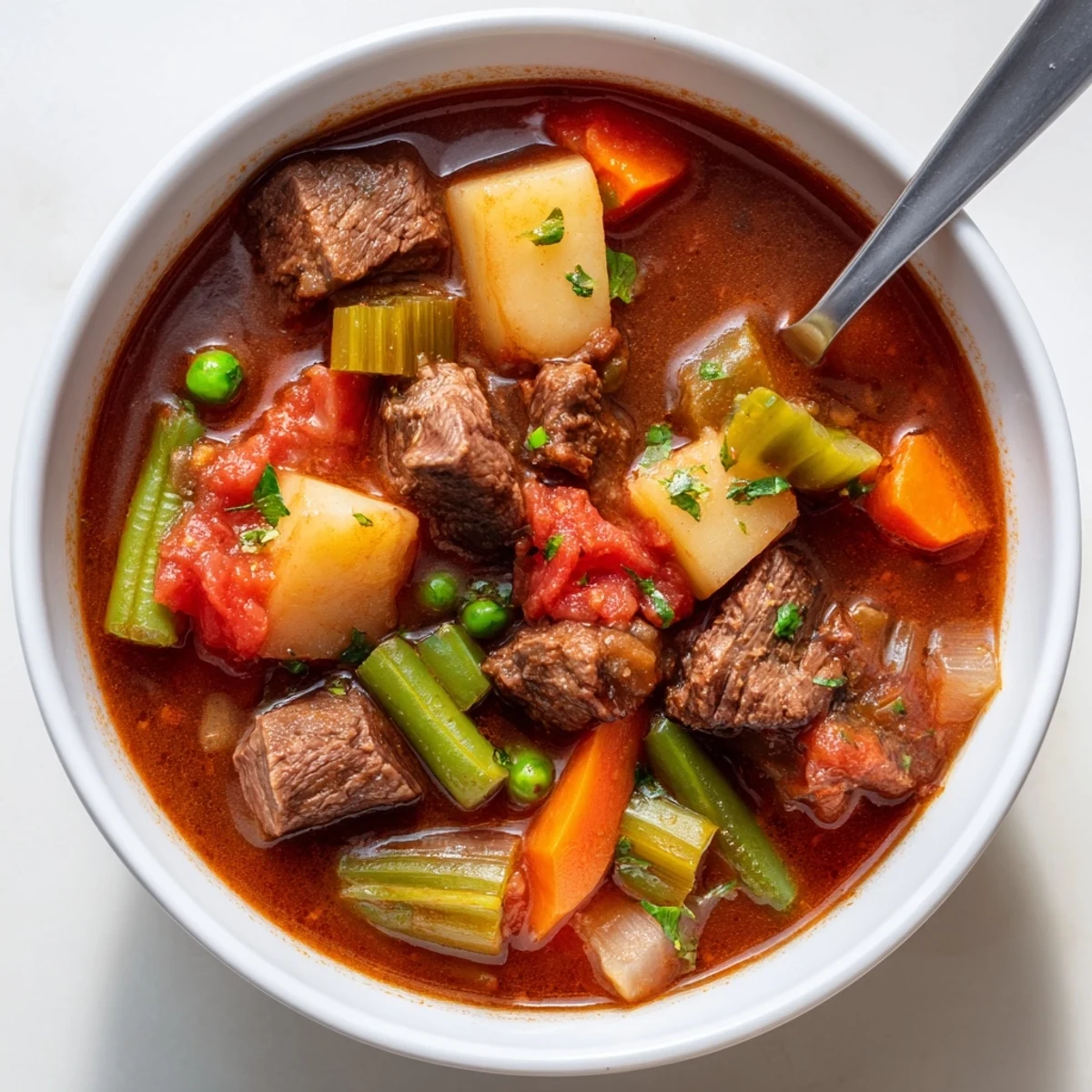
Save Pat and season beef, then brown in batches for depth of flavor. Sauté onion, carrots and celery, add garlic and tomato paste, then pour in beef broth, diced tomatoes, Worcestershire and herbs. Cover and simmer about 1½ hours, add potatoes and green beans for 25 minutes, then stir in peas. Finish with chopped parsley and adjust seasoning for a warm, hearty bowl.
There are certain soups that simply demand attention the moment their aroma hits the air, and this braised vegetable beef soup is one of them. I recall the sizzle of cubes of beef browning as I shuffled around my kitchen one rainy afternoon, the kind of day when comfort food feels less like a meal and more like a remedy. As the vegetables mingled in the pot, the distinct notes of thyme and garlic started curling around the room, nudging everyone toward the kitchen. It was the sound of a wooden spoon scraping up those golden bits on the bottom of the pot that made me smile—something so ordinary, yet so vital for flavor.
One winter, I made a double batch of this beef soup the night before a little impromptu gathering with friends. By the time the doorbell rang, the deep, savory aroma had everyone lingering by the stove instead of the couch. My neighbor confessed she’d just come for ‘whatever was simmering’ because she could smell it two floors down. That evening, ladling steaming soup into mismatched mugs, I realized cooking together often draws us closer than any dinner reservation ever could.
Ingredients
- Beef chuck: Opt for well-marbled meat; browning it thoroughly adds unbeatable richness to the broth.
- Olive oil: Use just enough to coat the pot, and don’t be afraid to get it shimmering hot for a good sear.
- Onion: Diced small so it melts into the background, lending subtle sweetness.
- Carrots: Their natural sugars deepen the broth—slice thicker for bite, thinner for tenderness.
- Celery: Slice evenly, as these help balance the soup’s earthiness.
- Garlic: Added after the onion softens, it perfumes the whole pot—stir constantly for only a minute to avoid bitterness.
- Potatoes: Waxy potatoes work best; dice them up so they don’t dissolve completely.
- Green beans: Trimmed and cut to the same size as potatoes for satisfying spoonfuls.
- Diced tomatoes with juice: These bring a welcome tang and body—resist draining off the juice, as it boosts the broth.
- Frozen peas: Toss in at the end to keep them bright green and slightly crisp.
- Beef broth: A good quality broth ties everything together; homemade or low sodium lets you control seasoning.
- Tomato paste: Stirred into the beef to build savory complexity before the liquids go in.
- Worcestershire sauce: A dash or two deepens the umami quotient; start small and taste as you go.
- Bay leaves: Remove before serving—nobody wants a surprise crunch in their soup.
- Dried thyme and oregano: Rub between your fingers as you sprinkle, which releases their essential oils.
- Salt and black pepper: Start light; you can always add more but never take it away.
- Fresh parsley: Sprinkle just before serving for a burst of color and brightness.
Instructions
- Prepare and season the beef:
- Pat beef cubes dry, sprinkle them with salt and pepper, and listen for the sizzle as they hit the hot oil.
- Brown the beef:
- Work in batches if needed, browning all sides until golden; set pieces aside and admire the caramelized bits left behind in the pot.
- Sauté aromatic vegetables:
- Add onion, carrots, and celery to the same pot and let them sweat, stirring occasionally; once softened, stir in garlic until fragrant.
- Build the base:
- Return beef to the pot, stir in tomato paste until it darkens, then pour in broth, tomatoes, Worcestershire, herbs, and bay leaves.
- Simmer low and slow:
- Cover and let cook on low for 1.5 hours; your kitchen will fill with a heady blend of savory and herby scents.
- Add hearty vegetables:
- Stir in potatoes and green beans, then cover and continue simmering for about 25 minutes until everything is fork-tender.
- Finish with peas:
- Scatter peas over the top, cook uncovered for a final 5 minutes, then fish out bay leaves with tongs.
- Season and serve:
- Taste and adjust salt and pepper if needed, ladle into warm bowls, and finish with fresh parsley sprinkled by hand.
 Save
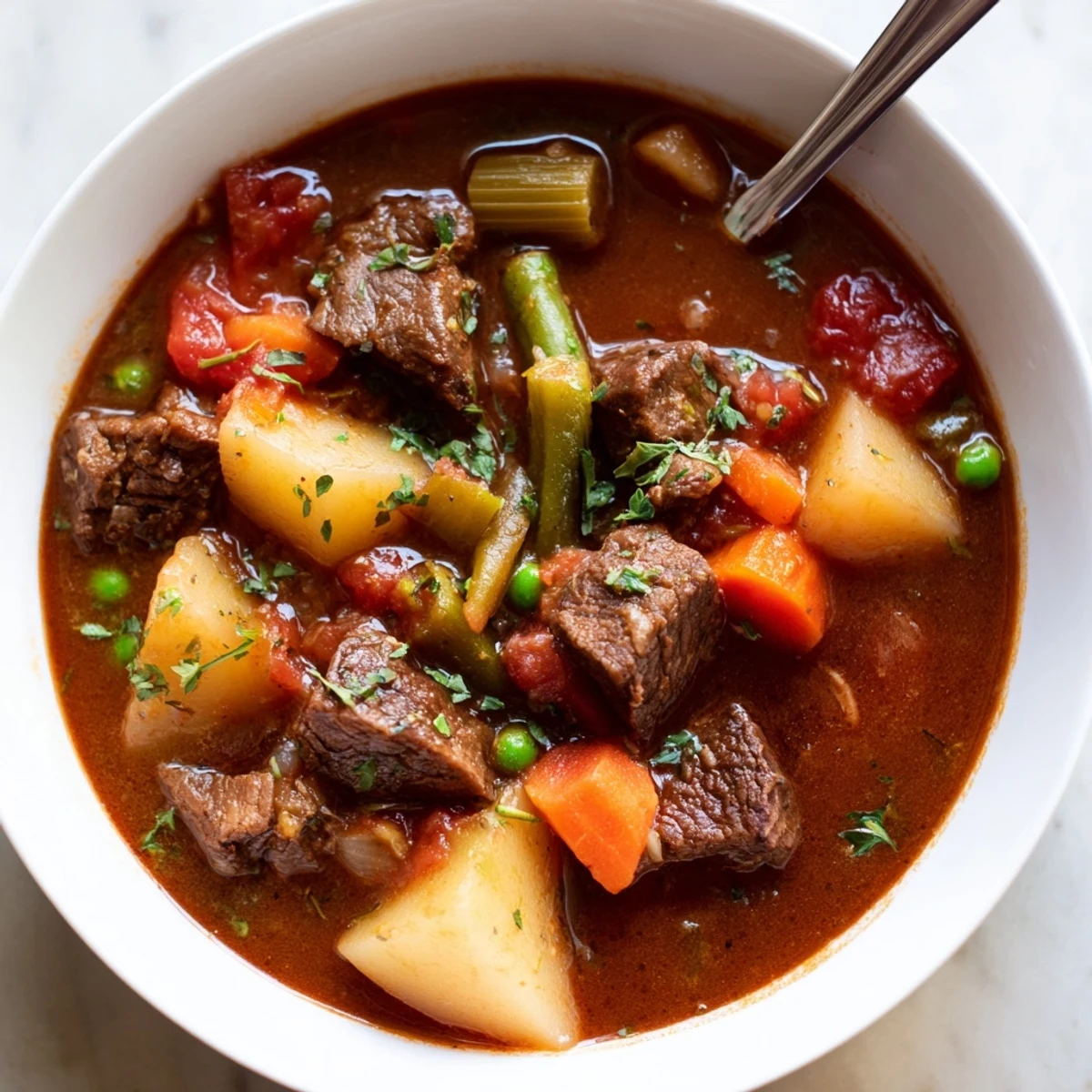
Save I’ll never forget making this soup after a long hike—it was a reward worth every mile. Sharing it with friends around my kitchen table, muddy boots by the door and cheeks still rosy from the cold, transformed a simple soup into a true celebration.
Letting the Soup Work Its Magic
I used to constantly peek under the lid, worried something might burn or go wrong, but learned that leaving the pot undisturbed is key to braised goodness. Patience lets the flavors blend and makes the beef impossibly tender—it almost falls apart when stirred. Letting it go low and slow may test you, but it’s always worth it.
Choosing and Swapping Vegetables
It’s easy to change up the vegetable lineup here—sometimes I swap in parsnips or even corn if that’s what I have on hand. This flexibility comes in handy when you find your crisper drawer full of forgotten produce. The secret is to add quick-cooking veggies late so they keep their color and texture.
Serving Suggestions for a Cozy Meal
Nothing beats dunking a slice of crusty bread into this soup, soaking up every drop of broth. Adding a glass of medium-bodied wine, like Merlot, turns your bowl into a bistro-worthy meal right at home. If you have leftovers, they reheat beautifully for lunches and lazy weeknights.
- Don’t forget to check your pot’s bottom occasionally for sticking.
- Keep your herbs handy and fresh parsley for the last flourish.
- Your soup can always handle another pinch of salt after tasting.
 Save
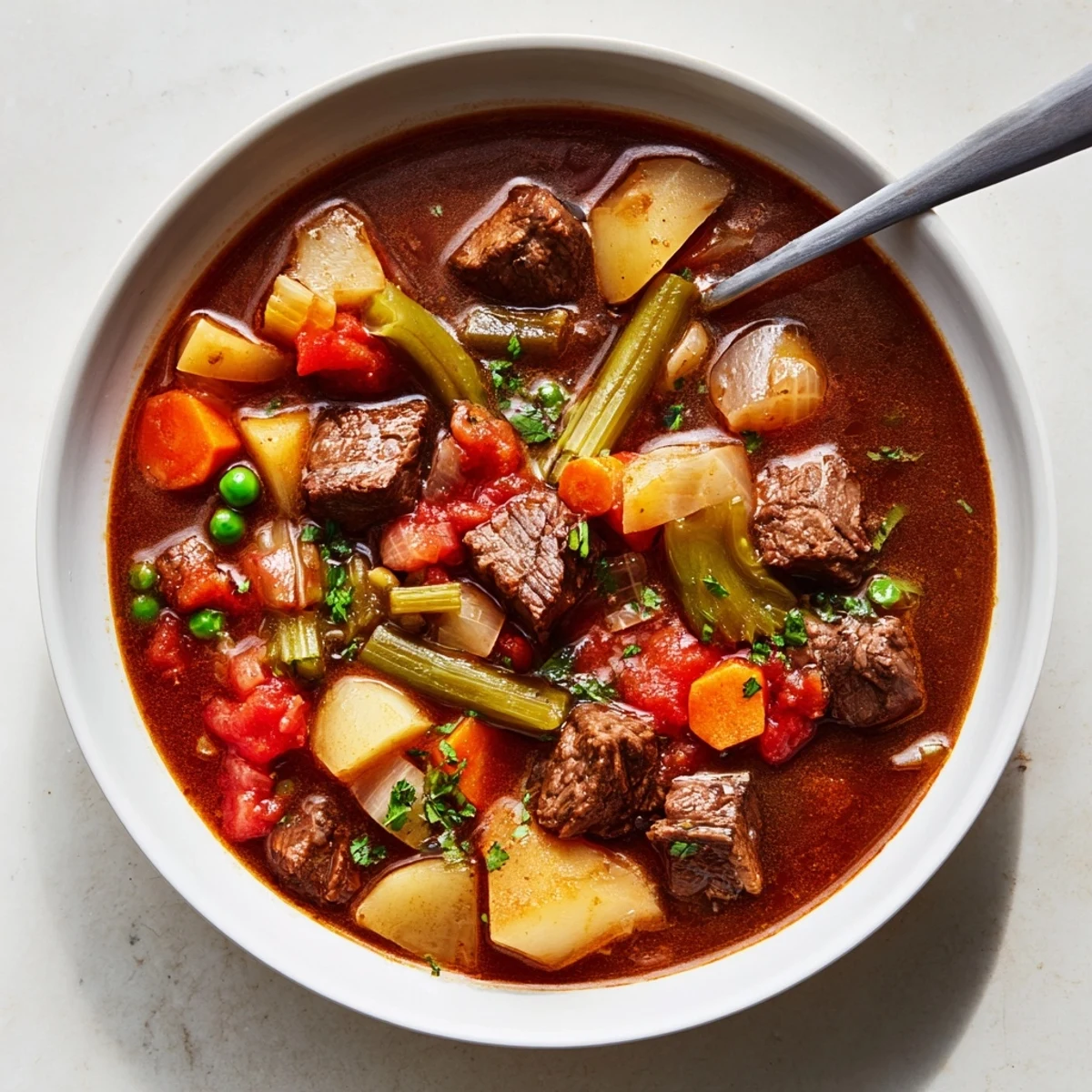
Save This soup proves that even the simplest ingredients, when given time and care, can transform into something extraordinary. May your kitchen fill with warmth and good company every time you make it.
Recipe FAQs
- → How long should the beef simmer for fall-apart tenderness?
-
Braising until the beef is very tender usually takes about 1½ to 2 hours after simmering. Start by searing the cubes to build flavor, then low-and-slow simmer covered until the meat gives easily with a fork.
- → What cut of beef works best for this dish?
-
Beef chuck or other well-marbled stew cuts are ideal because connective tissue breaks down during long simmering, yielding tender, flavorful bites. Lean cuts can dry out unless cooked gently and not over-reduced.
- → How can I thicken the broth if I want a richer finish?
-
Reduce the broth over medium heat to concentrate flavors, mash a few cooked potatoes into the liquid, or whisk a small cornstarch slurry into simmering broth until it reaches the desired body.
- → Can I lighten the dish while keeping flavor?
-
Yes—swap beef for turkey thigh or chicken for a lighter profile, and use low-sodium broth. Searing the meat and using tomato paste still builds depth without extra fat.
- → Is this suitable for make-ahead and freezing?
-
It stores well: refrigerate in an airtight container for 3–4 days or freeze for up to 3 months. Reheat gently on the stovetop, adding a splash of broth if needed to refresh consistency.
- → How should I adjust seasoning and garnish?
-
Taste after vegetables are tender and adjust salt and pepper. Finish with chopped fresh parsley for brightness and serve with crusty bread to soak up the savory broth.